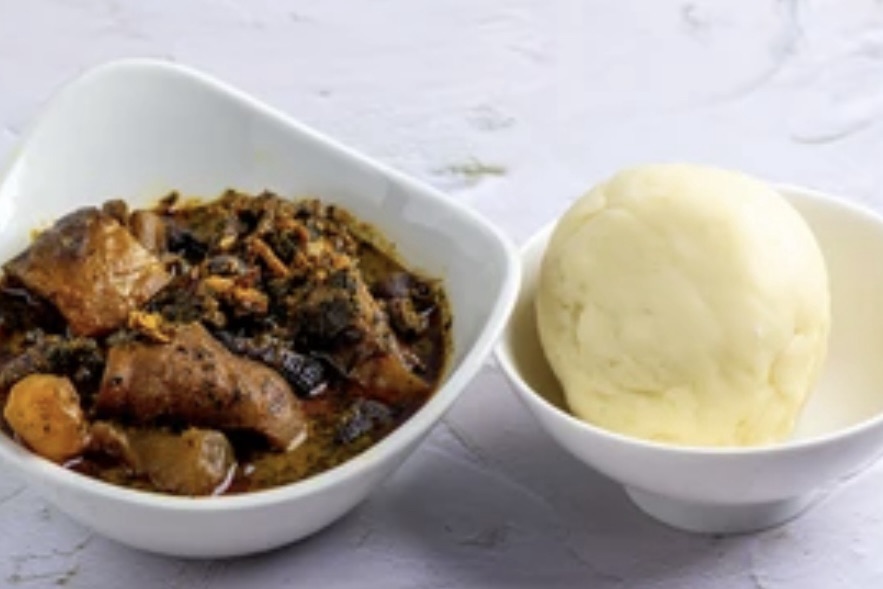
Periwinkles are small edible marine mollusks commonly found in coastal and mangrove environments, especially along the shores and creeks of Southern Nigeria. They live in shallow marine and brackish waters, clinging to rocks, mudflats, and mangrove roots, where tides regularly rise and fall. Periwinkles have hard, spiral-shaped shells that are usually dark brown, black, or grey, which protect their soft bodies from predators and drying out. Inside the shell, the body is soft and often grey to cream in colour, with a muscular foot that allows them to crawl and firmly attach to surfaces. They feed mainly on algae and organic matter, helping to keep their environment clean. Periwinkles are small in size, typically measuring about 2-5cm in length. A fun fact about periwinkles is that they can survive out of water for long periods by sealing themselves inside their shells during low tide. In cooking, periwinkles are widely enjoyed in Nigeria and other coastal regions. They are usually washed thoroughly and boiled to remove sand before being added to soups and stews such as edikang ikong, afang, and ogbono, as well as sauces and other seafood dishes, often seasoned with pepper, onions, and local spices.
 Idewu Onikoyi Family branch