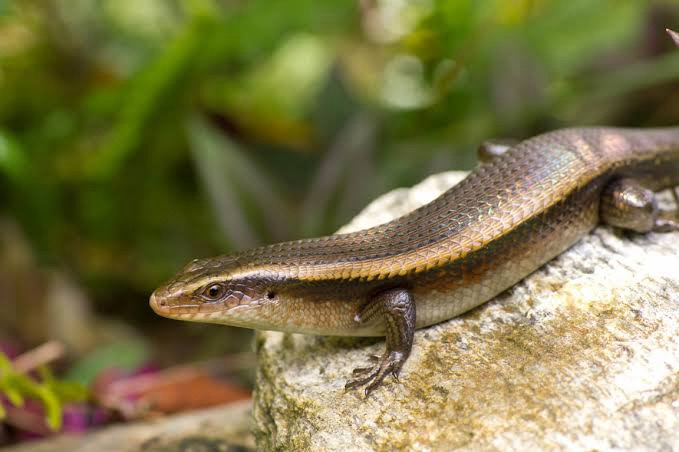
Skinks found in the mangrove forests of Nigeria are small but fascinating reptiles that are well adapted to life in warm, humid environments. They are often seen moving quickly among fallen leaves, mud, tree roots, and decaying wood within the mangrove ecosystem. These environments provide them with shelter from predators and abundant insects to feed on. Physically, skinks have long, slender bodies with relatively short legs, though some species have legs so small that they almost appear snake-like. Their bodies are covered with glossy smooth, shiny scales usually brown, gray, or olive in colour that help them blend easily with the muddy ground and leaf litter of the mangrove forest, making them difficult to notice. The head of a skink is small and slightly pointed, allowing it to easily push through narrow spaces and burrows. Their eyes are usually round, dark, and protected by movable eyelids, which help keep out dust and debris while they move through the ground and vegetation. Skinks also have small but sharp teeth inside a narrow mouth, which they use to catch and chew insects and other tiny prey. Their tongue is flexible and sensitive, helping them sense their surroundings. Another striking feature is their long tail, which is often nearly the same length as their body. When threatened, a skink can shed its tail, and the detached tail continues to wiggle, distracting predators while the skink escapes. Over time, the tail grows back, although the new one may be shorter than the original. They are mostly active during the day and often bask in the sun to warm their bodies before moving around to hunt for food. Most skinks found in Nigeria are small to medium-sized, usually measuring between 10-30cm in total length, including the tail. Despite their small size, they are very quick and agile, able to disappear into cracks, burrows, or under debris within seconds.
 Idewu Onikoyi Family branch