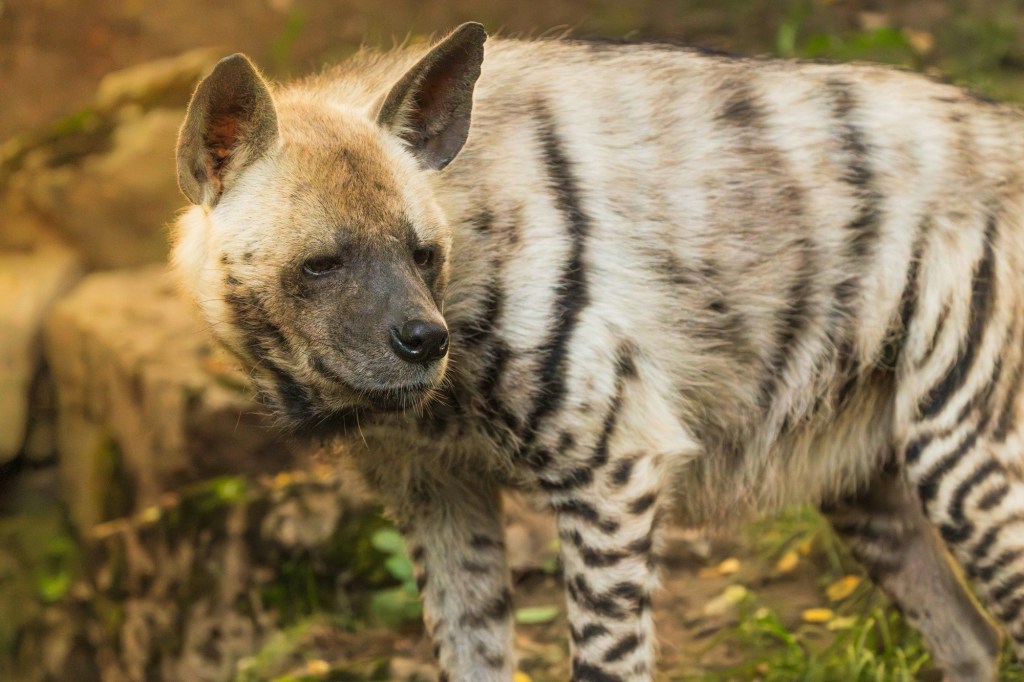
The African civet are found in mangrove forest areas of Nigeria. They lives mainly along mangrove edges, swamp forests, and nearby riverine vegetation in coastal regions, particularly in the south. It has a long body with coarse grey to yellowish fur marked with black spots and stripes, a black and white facial mask which makes them easy to recognise, short legs, and a long bushy tail that helps it move through dense mangrove undergrowth. Despite looking like a cat, they are not cats, they belong to a different animal family. African civets can eat almost anything; fruits, insects, crabs, small animals, eggs, and even leftover meat. They are nocturnal animals that are active at night and sleep a lot during the day and can rest for many hours, waking up mostly at night to look for food, they are night walkers, their eyes are well adapted to see in the dark. They are known for producing a strong smelling substance called civet musk, which has been traditionally used in perfumes. African civets usually measure about 65-90cm in body length, with the tail adding another 40-50cm, and weigh between 7 and 20kg. A fun fact about the African civet is that it can live quietly near mangrove settlements while remaining rarely seen due to its secretive nature.

 Idewu Onikoyi Family branch