
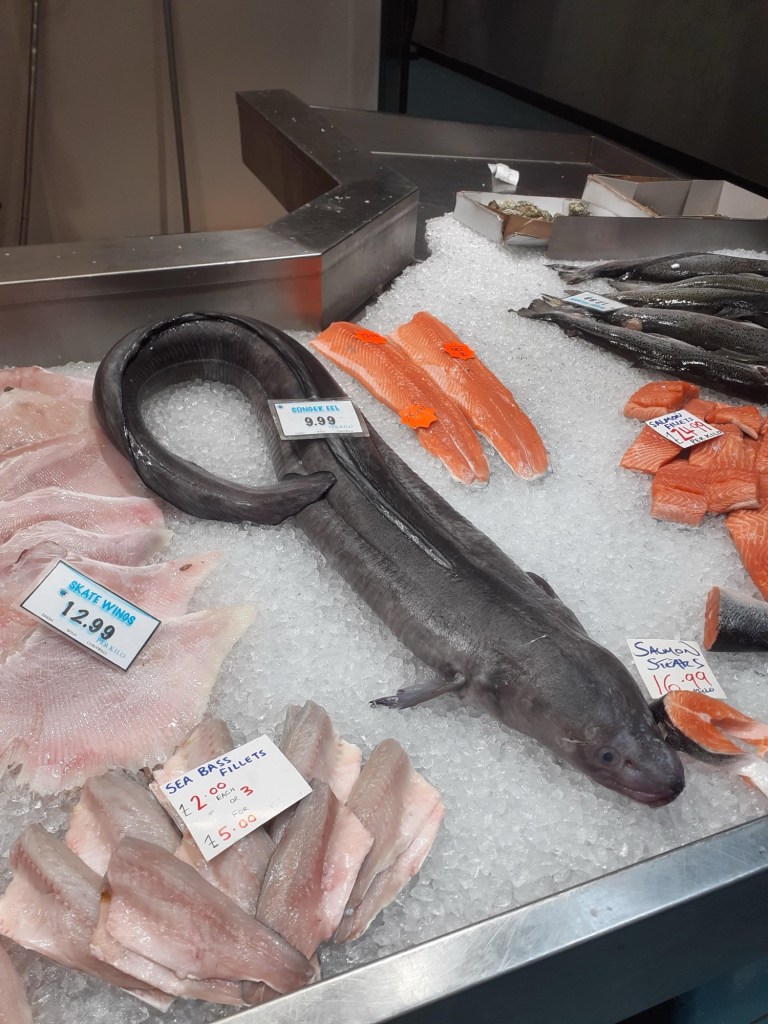
Eels are fascinating creatures that live in both freshwater and saltwater environments around the world, inhabiting rivers, lakes, swamps, estuaries, and coastal waters, with some species spending most of their lives in the ocean. Many eels are migratory, traveling long distances between freshwater and the sea to reproduce. They have long, snakelike bodies that end in a modified tail fin, lack pelvic fins, and many species even lack pectoral fins. Eels are characterized by strong jaws and small, sharp teeth, and they are primarily nocturnal hunters, feeding on small fish, crustaceans, insects, and worms, while some burrow into sand or mud to hide during the day. They have unique adaptations, including the ability to absorb oxygen through their skin, allowing them to survive in low oxygen waters or even out of water for short periods. Their size varies widely depending on the species, ranging from small eels about 10 centimeters long to large moray eels reaching up to three meters. In many cultures, eels are considered a delicacy and can be grilled or smoked, stewed or braised in rich sauces, fried after being breaded, or served as sushi or sashimi. Their rich, oily flesh makes them especially prized in cooking, and their mysterious, slippery nature has fascinated humans for centuries.
 Idewu Onikoyi Family branch